CoreCase: Flexibility at the heart of gas turbines

Welcome to the latest CoreCase

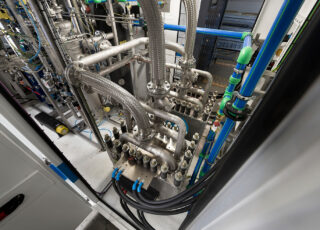
Inside a gas turbine, fuel lines connect to the combustion chambers within a complex layout. These lines need to fit the available space and handle vibration and movement caused by temperature changes. 

For one leading gas turbine manufacturer, CoreDux developed fuel supply assemblies that combine flexible metal hoses with bent tube sections. The two companies have continued to develop these assemblies as the customer’s turbine designs have evolved. 

In this CoreCase, we explore how CoreDux helps the customer design fuel lines for these demanding conditions, using engineering expertise and simulation to assess how they will perform. 
The challenge: handling movement within a complex layout

The customer’s earlier designs used rigid piping. Vibration and movement caused by temperature changes put stress on these pipes. CoreDux proposed flexible hose assemblies to accommodate that movement and give engineers more options for routing the fuel lines.

The customer needed a solution that would fit the turbine and perform reliably over its intended service life. This meant looking closely at the shape of each assembly, the available space and the movement it would need to handle.

As turbine designs evolved, the customer’s requirements became more demanding. The assemblies needed to provide flexibility while also meeting tighter requirements for dimensions and fit.

CoreDux worked with the customer to assess what each design could achieve and where adjustments were needed.

How flexible is a flexible metal hose?

A flexible metal hose can accommodate movement, but only within the limits of its design. Its size, construction and installed shape determine how much it can bend or move. 

This matters particularly for large assemblies. A large, heavy hose cannot be expected to bend as easily as a small one. Engineers need to check whether it can handle the movement required in the proposed layout. 

Can the hose connect the required points? Can it accommodate movement once installed? Does the routing need to change? 

These questions make the hose assembly an important part of the turbine design. 

The CoreDux approach

CoreDux used simulation, prototype testing and qualification tests to help establish whether the flexible assemblies met the customer’s requirements.

Introducing the solution took time. Both companies needed to assess its performance and build confidence in using flexible assemblies within the customer’s turbine designs.

Simulation remains an important part of the collaboration today.

When the customer proposes a new layout, CoreDux assesses how the assembly is expected to respond ot he specified vibration and movement.

The engineering teams review the results together. They can then decide whether the proposed design is suitable or needs to change.

This gives the customer a clearer basis for making design decisions.

The CoreDux solution

CoreDux developed fuel supply assemblies with a flexible hose section between bent tube sections. The tubes connect the assembly to the surrounding equipment, while the flexible section accommodates the movement specified for the application.

Each assembly is designed for the customer’s equipment. Different turbine configurations require different dimensions, shapes and routing. The design also needs to account for the conditions in which the turbine will operate.

The customer and CoreDux continue to develop these assemblies as requirements change. The basic concept remains the same, while individual designs are adapted to the application.

Throughout this process, CoreDux helps the customer understand how the flexible assemblies can fit and function within the turbine.

Checking a design before it is built

A proposed layout may look workable in a drawing, but engineers still need to assess how the assembly will behave during operation. 

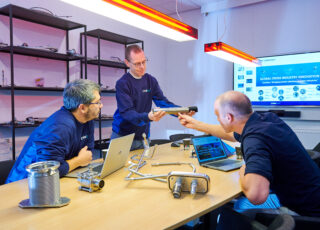
For example, the customer may ask whether a large hose assembly can accommodate a particular movement within a limited space. CoreDux uses simulation to help evaluate that proposal under the specified conditions. 

The results support a practical discussion: what can the assembly handle, where are its limits and what needs to be adjusted? 

By combining its knowledge of flexible hoses with the customer’s knowledge of the turbine, CoreDux helps assess the design before moving forward. 

Strategic value

Over time, the collaboration has grown to include ongoing engineering support alongside the supply of fuel line assemblies. 

The customer turns to CoreDux to discuss demanding layouts and understand what the hoses can accommodate. According to Damien, this ability to assess design options is a key reason the customer values the relationship. 

The partnership also involves production planning. The customer needs consistent quality and reliable delivery. CoreDux needs a clear view of future demand to plan materials, staffing and production space. Close coordination helps both companies prepare for changing requirements, from the first engineering discussions through to manufacturing and delivery. 


The result

CoreDux’s flexible fuel supply assemblies are now an established solution for this customer. The companies continue to work together as turbine designs and requirements evolve. 

The customer has access to assemblies designed for its equipment, supported by engineers who can assess challenging layouts and movement requirements. Simulation helps the teams evaluate proposed designs and understand how they are expected to behave under defined operating conditions. 

The case shows how expertise in flexible hoses contributes to gas turbine development. CoreDux combines that expertise with manufacturing and ongoing customer collaboration to support the design and supply of the fuel line assemblies. 

Do you want to know more about this project or what we can do for you? Feel free to contact us.

Get in touch

Read our latest articles here:

In this project, CoreDux focused on qualifying its PTFE hose solution according to Aeronautic industry standards and coordinating the qualification of the customer-specific assembly in line with the application requirements.

Read more →
Hydrogenic, hydrogen embrittlement

Controlling material integrity in hydrogen systems Why is hydrogen embrittlement difficult to control? Hydrogen is becoming an increasingly important energy…

Read more →

As High Tech systems become increasingly specialised, the limitations of standardisation become more visible. Standard components and predefined solutions are…

Read more →
Read more news