
Engineering ultra-clean hose systems for critical applications
What materials are best suited for ultra-clean hose systems?
In high-purity gas, liquid and vacuum applications, cleanliness is not a specification on paper. It is a functional requirement that directly affects process stability, product quality and overall system reliability.
Yet “ultra-clean” is often treated as a generic term, while in reality contamination risks differ fundamentally depending on where they originate. In flexible hose systems, purity must be engineered from two perspectives:
- The inside of the hose; in direct contact with the medium.
- The outside of the hose; exposed to the surrounding environment.
Both require a distinct material and process strategy.
Why ultra-clean performance is application-specific
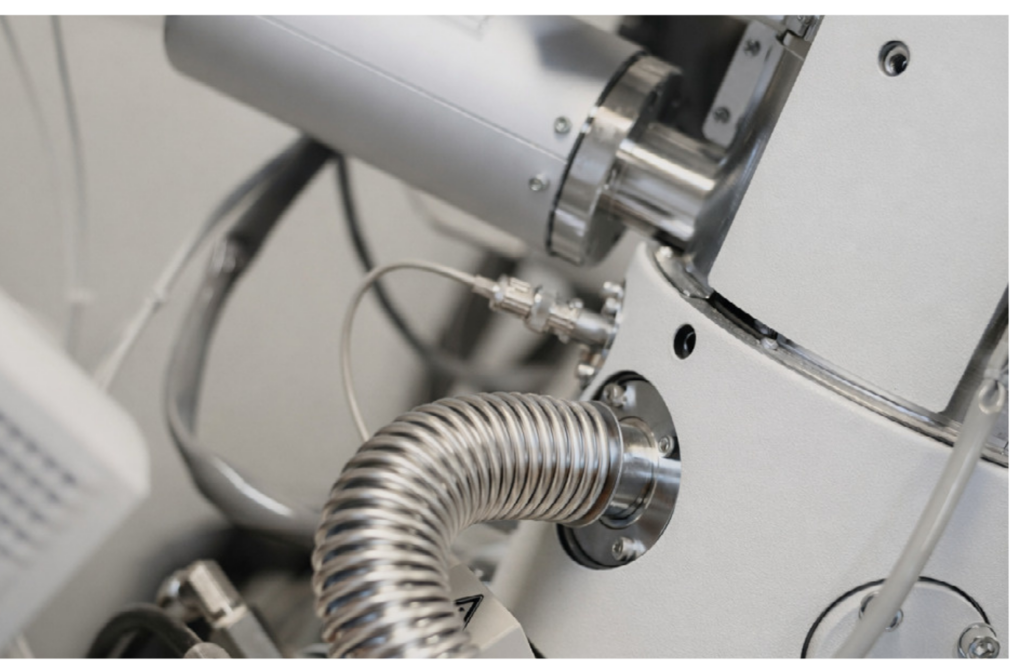
Ultra-clean hose systems cannot be defined by a single material choice. Contamination risks arise from different mechanisms and demand a differentiated approach. Inside the hose, material compatibility and surface condition are critical. The inner liner is in continuous contact with the medium, making it the primary interface for purity control. Depending on the application, materials such as PTFE, PFA or stainless steel are selected for their chemical inertness, low particle release and suitability for ultra-high-purity (UHP) environments.
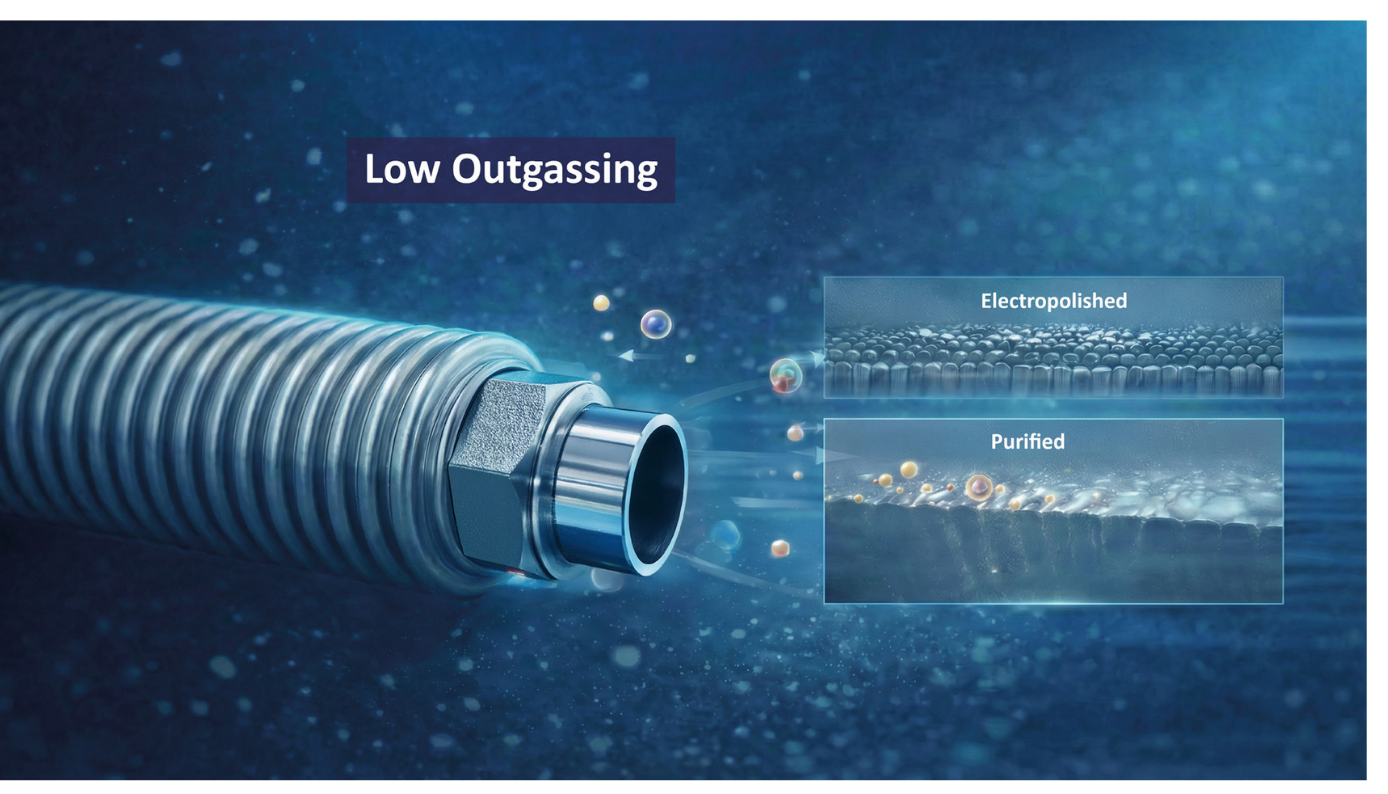
For stainless steel hose assemblies, maintaining cleanliness over the full lifetime of the system requires more than initial cleaning. Surface characteristics directly influence particle adhesion and outgassing behaviour. Applying electropolishing on the inside of stainless steel hoses reduces surface roughness, minimises contamination retention and helps preserve purity during long-term operation.
Outside the hose, contamination risks follow a different logic. In mid to deep vacuum environments, outgassing from external surfaces can compromise system performance. Here, material selection and purification processes must focus on eliminating volatile residues rather than surface finishing alone.
Engineering purity as a system property
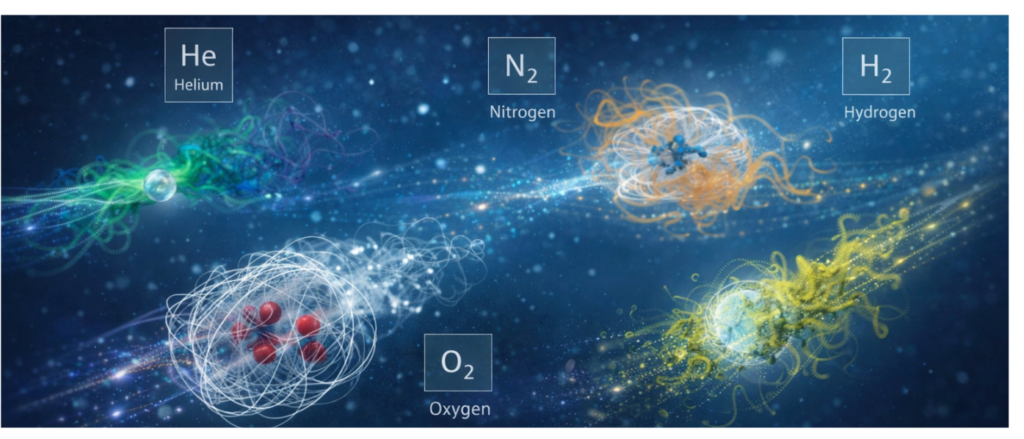
At CoreDux, purification is approached as a system-level engineering challenge. Cleanliness is not defined by materials alone, but by how materials, surface treatments and cleaning processes interact within the specific application context. For vacuum applications, the CoreDux UHP range is purified to meet the demands of deep vacuum environments. In these cases, electropolishing is not required, as the purification process itself ensures low outgassing behaviour and compatibility with vacuum performance requirements.
By aligning material selection, internal surface treatment and purification processes with the actual contamination mechanisms at play, ultra-clean hose systems can be engineered for both performance and longevity. Ultra-clean is not a label. It is the result of controlled engineering choices, made while compiling the product across the entire value chain.
Conclusion: safeguarding purity over the lifetime of the system
Ultra-clean hose systems demand a precise understanding of where contamination risks originate and how they evolve over time. By separating internal and external purity requirements and engineering each accordingly, long-term system integrity can be safeguarded.
Choosing the right materials, applying the appropriate surface treatments and integrating purification into the design process makes the difference between nominal cleanliness and sustained ultra-high-purity performance.
Are you facing purification challenges in a critical application? Our engineers are ready to explore the challenge with you.